Showing posts with label book review. Show all posts

Friday, January 13, 2023

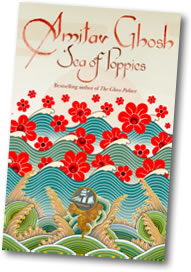
Sea of Poppies Review - Amitav Ghosh


I recently read the book Sea of Poppies written by Amitav Ghosh. It is a fictional story written in the backdrop of the Opium wars with China in 1830s. 

This is the first book in the Ibis Trilogy. Ibis is an American ship used for slave trade. After American abolished African slave trade in 1808, a British trader buys the ship. He plans to use it to transport indentured labor to Mauritius. Mauritius' sugarcane cultivation was labor intensive. Abolition of slavery caused acute labor shortage. Hence the plantation owners decided to import labor from India. 

This journey on Ibis to Mauritius brings together a group of people each one showing a different side of British colonialism. 
There is a  mulatto American who is on the crew of Ibis as it sails from Baltimore to Calcutta to espace racism.  There are the lascars who help with bringing the Ibis to Calcutta and later to Mauritius.  There is a chaste king of Raskhali whom the British sentence for forgery and send to Mauritius. There is a high caste lady who married an opium addict and wants to die by Sati but a low caste man saves her.  She is on the run and gets into the ship for indentured labors. There is the daughter of French botanist whom a Muslim lady raises and is at home in Bengali customs. When her father dies, she gets into the ship to escape a marriage. These and many other characters all come together in Ibis on the trip to Mauritius. 

Through the stories of these people, Ghosh tells us about the opium trade with China. There was great demand for tea, porcelian and silks from China in Britain and Europe. But the British didn't have anything that China liked to trade with them. Because of this, the British had to pay in silver and gold for the trade. They started exporting opium to pay for these goods. The Emporer banned trade of opium as the opium was addicting the Chinese. Even after the ban, opium was being smuggled. To stop it, the chinese captured the ports and destoryed the opium. Opium was one of the biggest revenue generators for the empire. So Britian went to war with China to allow them to trade opium. The Chinese lost this war and in a later opium war had to give away HongKong for lease. 

To get all this opium to sell, the British leaned on Indian farmers. They compelled the farmers to cultivate opium by entering into unfair advance contracts. This devasted the farmers as the opium cultivation was uprofitable. The land was being diverted from food crops so they couldn't grow their food anymore. This caused lot of farmers and poor to migrate to Mauritius as slave labor. 

It illustrated a part of colonial history I was not familiar with and wanted me to read more. The consequences of all these events are still visible in the world. India is a biggest legal opium producer for pharmaceutical purposes. Mauritius still has a large Indian origin population. China still uses the opium war as insult to national pride. 
Ghosh using different languages and dialects was able to make the story real. The book was an easy read and I couldn't put it down. If you have any interest in colonial history, it is a great read. 

Monday, October 11, 2010

Book Recommendation - The Switch

Cover of "Switch: How to Change Things Wh...Cover via AmazonI completed reading a book called 'The Switch' written by Dan Heath and Chip Heath. It is a very well written book. It is a book about making change when it is difficult. If you want to quit smoking, but aren't unable to do it or if you are in a legacy industry whose competitiveness is threatened by internet and want to make difficult changes, this book lays out a very clear way for making the change.

When we know that we have to change, then we feel that we have enough reason to change and we can easily navigate the change. But if you have tried to change anytime, you would have observed that it is not that easier. To understand it, the authors have used  a model. Assume a rider riding on top of an elephant. Your analytical mind is the rider. You know all the facts about why to change, what to change. The emotional or feelings part of mind is the elephant. So for your analytical mind to make the change, you have to ride the inertia and emotions. But imagine if you can have strong emotions for change, then riding the elephant would become a breeze in the right environment. Right environment is the third factor. Suppose you have to make an elephant go uphill. It is a difficult task but if you make a clear road in the way, it would be easier for the elephant to go.
 Lets take an example here. Consider some person is trying to quit smoking. He knows why it is important to quit smoking but he doesn't have sufficient motivation to quit. Now assume, he imagines how happy his wife would be and how much good it is for his kids, then he gets motivated. He then decides he will quit smoking. He goes the whole morning without smoking but after lunch he couldn't control his feelings to smoke. Then he can make it easier for him to quit it by scheduling meetings right after lunch so that he needn't have any time to go and smoke.
So change consists of three parts, they are

1. Shape the path: They have to clear the path or environment for change - For eg, if you want to eat healthy food, other junk food should first be thrown off your shelves. You should fill it with fresh fruits and vegetables. etc.

2. Direct the rider: There are two parts in our brain. One that is emotional and doesn't do what it has to even though it knows. It is swayed by emotion. They call it the elephant. Other part is rational brain which analyses and comes at the right decision. This is called the rider.  They say that due to many alternatives, the rider comes into analysis-paralysis mode and is confused. To overcome this problem, the rider should be directed correctly.

3. Motivate the elephant: As told above, even though when we rationally know what the right decision is, most of the time we fail to see through it if the emotional part of brain, the elephant is not motivated enough. So the elephant should be motivated.

Head over to my book reviews blog here to read a summary of various ways in which you can make harder change easily.
Enhanced by Zemanta

Wednesday, September 15, 2010

Updates & Touching Love Stories

Hi friends,
It is some time since I updated my blog. I was busy preparing for my driving test. If you have read my previous posts aka car stories here about US, you know that living without a car in the suburbs is very difficult. So I was eagerly  awaiting my driving test after which I can buy a car. But unfortunately, I failed in the test. I practiced generally without markings and without seeing how a test track looks like for a parallel parking. So when I went in for the test the area was far smaller than what I have imagined, so I couldn't park in the cramped space to be declared 'Failed' . So I have to endure another month of waiting before I can buy my car.

Another interesting thing - We all love stories.. So my friend Sandy has written some beautiful love stories and he has published them. So go read them and have a good time. You can download the pdf here

I liked the geeks love story and the story of Akash and Akshaya.
So go ahead and download the story and let him know your feedback.

Friday, July 30, 2010

Men are from Mars, Women are from Venus

I am reading the book 'Men are from Mars, Women are from Venus' by John Gray. It contains many insights about the differences between the ways of communication between men and women. It will give you many ahaa... moments.
Some of the gems...
**************************************************
Men like to solve their own problems and they like taking advice when asked.
Women like to share their problems, even when they are not expecting them to be solved and they don't require solutions. They just want their men to listen to them.
Women should not give advice to their husbands unless asked.
**************************************************
Men feel fulfilled in a relationship when they feel needed but turned off by neediness
Women feel fulfilled if they are cherished.
**************************************************
Women grow resentful when they feel that they have given more and are getting less in return.
They should learn to set boundaries, so that they dont resent it.


ʺNeedingʺ is openly reaching out and asking for support from a man in a trusting manner, one
that assumes that he will do his best. This empowers him. ʺNeediness,ʺ however, is desperately
needing support because you donʹt trust you will get it. It pushes men away and makes them
feel rejected and unappreciated.


Men are afraid of giving because they are afraid of not giving enough. So they don't make an effor to give.
****************************************************
What women says should not be taken literally for e.g - If she says "You never listen to me" - what she says is he is not listening to her right now. Women like to take poetic license in expressing their feelings but men just give information like.

eg. W: ʺWe never go out.ʺ M: ʺThatʹs not true. We went out last week.ʺ

When a venusian is upset, she uses generalities
****************************************************
Male intimacy cycle: When men become too close, they withdraw. It is normal for men. When they come too close, they feel like loosing themself. So they got their caves and rejenuvate themselves.
Women should understand this and not punish them for pulling away
**************************************************

I haven't completed the book but  I will write the summary of remaining points in my book reviews blog.

Enhanced by Zemanta

Monday, January 11, 2010

Book Review - Don't Loose your mind - Loose your Weight

Health is wealth. That is one aspect of our life we want to risk with. We really want to be healthy. We really want to eat healthy food. But with such conflicting advice in the market it is really difficult to know what is good to eat and what is not. If there is one book which will let us know what is good and what is bad, and if you want to eat and stay healthy, this is the book.

Don't Loose your mind, Loose your weight is a book written by Rujuta Diwekar- The dietician of the stars. She has worked as the dietician of Anil Ambani, Amrita Arora and the famed zero figure of Kareena Kapoor.

Rujuta talks of two important things in the book. One is not to loose your mind in thinking that there are magic potions or magical foods or magical diets that can cure your problems of overweight. So she systemically writes about all the nutrients required by our body as well as giving interesting anecdotes of people who have followed various 'magic diets' and their problems.
She writes the book in conversational style and is very easy to read.

She writes - "We put all sort of things into our stomach and expect it to work very well. But we take better care of our car."
"Why do we pay so little attention to our stomachs? Is it because it never attacks us?"
You can expect the book to contain such witty lines to get attention to her point.

The next part of the book contains the four important rules of eating well which she calls is the core of the book.

This book is not just another diet book or eat this and all your problems go book. She says every food is good and promotes moderation in diet.

She promotes that you can even eat fried foods and high cal foods but advocates a very sensible view of how and when to eat them.

It is a must read book for all of them who want to be fit, eat and stay healthy.

As she asks us not to loose your mind, she continuously makes us understand the basics of eating right and by the end of the book we can really appreciate what eating right is.

Finally a must read book. I will write a summary of important points of the book in my book reviews blog.


Monday, December 21, 2009

Book Review: Hyderabad - Narendra Luther

Charminar at HyderabadImage via Wikipedia

With the issue of Telangana boiling in Andhra Pradesh, I just chanced upon a book called Hyderabad, a biography of Hyderabad written by Narendra Luther.

It is an account of Hyderabad from its beginnings till now. It starts with the building of Golconda fort till the debacle of the IT chief minister of the state ChandraBabu naidu.

I learnt a lot of interesting things about Hyderabad from that book.

> Md. Quli was the person who built Hyderabad. There was just a small settlement at the banks of river Musi before that. He built it exactly where he saw and married Bhagmati, his lover.
> There were two dynasties who ruled Hyderabad. The Qutb-Shahi and the Asaf-Jahi dynasty.
> Quli's city was one of the best in the world. There were lot of garden's in and around the city. All the Baghs in Hyderabad were all gardens from his time.
> Most of the modern development in Hyderabad happened in the prime ministership of Salar Jung.
> Hyderabad was a very beautiful city even till independence. It was after independence that city expanded rapidly.

You can read some of the poetry written by the Nawabs of the time. It was a breeze to read through the book and its like a whirlwind view of that society. But I was saddened to see the the last Nizam actually didn't do much and was sidelined by the Razakars and how the last Nizam was very stingy that he offered biscuits himself that to one by one and put in them in the locker!!!

Not a must read, but you can pick it up if you want to know about Hyderabad or particularly interested about history of Golconda, Charminar.

For the telangana issue, seeing by the history, the chief ministers who ruled A.P have violated the provisions of Gentlemen agreement and hence it makes a strong case for a separate Telangana.
Reblog this post [with Zemanta]

Saturday, August 1, 2009

Book Review - Upbeat


Rajesh started a company during the dot-com bust in 2000. He says it was a blessing in disguise though he never felt it that way then. He tells his experience of what he learn then and about how to thrive in business having an 'Upbeat' attitude.

As the saying 'It is your attitude that determines your altitude," Rajesh guides us how to choose the right attitude in these tough times. He asks us to avoid the many traps which hit us day in and day out making us even more a part of the problem than of the solution. He prods us to be tenacious, disciplined, flexible and more true to ourselves. He asks us to set higher standards for ourselves and raise the bar in the market and in the process becoming more remarkable and valuable.

Rajesh always has a great take on relationships and network. He teaches how to leverage and improve the network in these tough times by adding more value to it. I liked what he has to say on strategy.
Imagination is a poor substitute for reality. Otherwise people will imagine their way out of their troubles. Reality is real. Now that you have accepted reality, you need a game plan to address this reality and accommodate in your thrive plan. This will call for ruthless re-priortization of your projects.

And finally he exhorts us to play the game rather than watching it from the sidelines by saying "you need to paly the game to get somewhere"

As it is said knowing is not doing, doing is doing, Upbeat has a D I Y helpbook, after it offering practical suggestions to implement the various ideas explained in the book. I liked the excercises very much and it will surely help in making the most of the book.

Seth Godin says that the content of the business book can be condensed into a few lines, and Rajesh's message in Upbeat is to choose the right attitude and focus on what we can control and to tenaciously stay the course. Then why write a book ? It is about the motivation, it is about the persuation and the call for action and Rajesh doesnt just stop there but offers practical tips on how to go about applying the ideas in the book. Ultimately, though it is clear that we have to invent our solutions to the recession problem, reading this small book would definitely put us ahead in finding our solutions.
Reblog this post [with Zemanta]